At the heart of your small service business success is your ability to schedule meetings with customers efficiently.
Today’s modern software solutions aim to help you quickly streamline the scheduling process and book meetings. But do they?
The best appointment scheduling software will allow you to book multiple employees, take payments, and perform more marketing tasks. But which one is best?
We’ve tried all of the top appointment scheduling software apps and software available today, and we brought all of the information back here to help you make an informed decision. Let’s get you back to making appointments.
- Best Overall – Square Appointments
- Best for Payment Integration – Square Appointments
- Best for Multiple Employees – Zoho Bookings
- Best for Customization – Acuity Scheduling
The Best Appointment Scheduling Software for Small Business
Here’s a quick comparison of five appointment software solutions: Square Appointments, Zoho Bookings, Acuity Scheduling, Calendly, and Google Workspace Appointments.
1. Square Appointments
Square Appointments is a user-friendly appointment scheduling solution designed for small businesses. It allows users to easily manage appointments, send automated reminders, process payments, and access detailed customer information.
Square Appointments also integrates with other Square tools like point-of-sale systems. Learn more about Square and all they do for business owners.
Square Appointments is often praised for its user-friendly interface and seamless integration with other Square products.
Customers appreciate its robust features, including online booking, calendar management, and automated reminders. Some users have reported occasional glitches or limitations in customization options, but overall, small businesses have received it well.
Square Appointments comes in three plans:
Free Plan $0/mo (for a single location),
Plus Plan $29/mo (for teams), and
Premium Plan $69/mo (for complex bookings).
2. Zoho Bookings
Zoho Bookings is a comprehensive appointment scheduling software that offers a range of features such as calendar integration, appointment reminders, online payments, and customization options.
It is part of the Zoho suite of business applications and provides seamless integration with other Zoho tools.
Zoho Bookings is known for its comprehensive features, including appointment scheduling, calendar management, and online payments. Users appreciate its flexibility and customization options, allowing businesses to tailor the software to their needs.
However, some users have mentioned a learning curve for setup and navigation.
Zoho Bookings comes in three plans:
Forever Free $0/mo (for single users),
Basic $8/mo/user (for teams), and
Premium $12/mo/user (includes payments).
3. Acuity Scheduling
Acuity Scheduling is a flexible appointment booking software that caters to various industries and business sizes. It offers features like online appointment scheduling, automated reminders, customizable intake forms, and integration with popular calendar platforms.
Acuity Scheduling also supports group scheduling and class bookings.
Acuity Scheduling is famous for its ease of use and extensive integrations with various platforms, such as WordPress and Mailchimp. Customers appreciate its user-friendly interface, automated reminders, and robust scheduling capabilities.
Some users have reported occasional issues with syncing or customer support response times, but overall, it has received positive feedback.
Acuity Scheduling comes in three plans:
Emerging $20/mo (single user),
Growing $34/mo (up to 6 team members), and
Powerhouse $61/mo (up to 36 team members).
4. Calendly
Calendly is a popular appointment-scheduling tool known for its simplicity and ease of use. It enables users to create personalized scheduling links, share them with clients, and allow them to book appointments based on the user’s availability.
Calendly integrates with popular calendar platforms and offers automated reminders and time zone detection features.
Calendly is often praised for its simplicity and ease of use. Users appreciate its straightforward scheduling process, integration capabilities, and customization options. It has gained popularity among individuals and small businesses seeking a streamlined appointment scheduling solution.
However, some users have mentioned limitations in advanced features and customization.
Calendly comes in five plans:
Basic $0/mo/user,
Essentials $10/mo/user,
Professional $15/mo/user,
Teams $20/mo/user, and
Enterprise (custom pricing).
5. Google Workspace Appointments
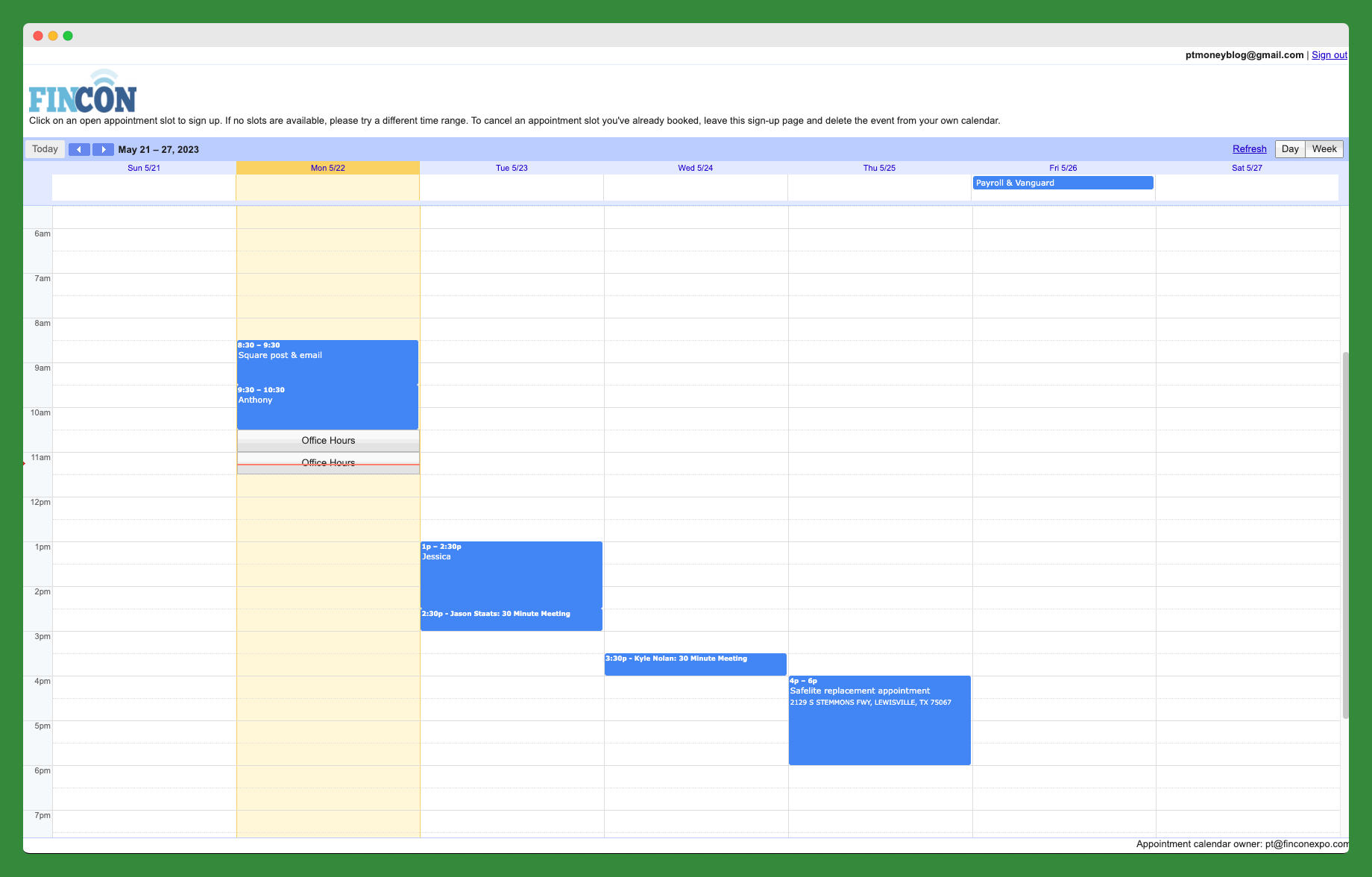
Google Workspace Appointments is a scheduling solution built within the Google Workspace ecosystem. It allows users to easily schedule appointments using Google Calendar, send event invites, and share availability with others.
Although it offers basic scheduling functionalities, it may lack some advanced features compared to standalone appointment software solutions.
Google Workspace Appointments is free with any Workspace plan. Workspace plans are:
Starter $6/mo/user,
Standard $12/mo/user,
Plus $18/mo/user, and
Enterprise (contact them).
Conclusion
In summary, each appointment software solution has its strengths and target audience.
Zoho Bookings and Square Appointments provide comprehensive features for businesses of all sizes; Acuity Scheduling offers flexibility and advanced customization options; Calendly focuses on simplicity and ease of use, while Google Workspace Appointments provides basic scheduling capabilities within the Google ecosystem.
Consider your specific requirements and business need to choose the most suitable option.
The post The Best Appointment Scheduling Software for Small Business [in 2023] appeared first on Part-Time Money®.
from Part-Time Money® https://ift.tt/KrhZIyU
Comments
Post a Comment
We will appreciate it, if you leave a comment.